Showing posts with label Mazda Cars. Show all posts

Thursday, March 24, 2011

Mazda Cars Style

Mazda MX-5 GT will be driven by Mark Ticehurst, who will be speeding down the Britcar MSA British Endurance Championship in 2011. With a weight of only 850 kg, this car can accelerate from 0-100 kpj in 3 seconds and able to penetrate 260 kpj. Jota Sport, engineering team, pulled off a variety of components for cars to be much lighter than the standard version, approximately 1.1 tons.

In the Mazda MX-5 GT car engine, lowered position. Meanwhile, suspension and transmission experience adjustment. Maybe this is an important question. How much power the engine of the Mazda MX-5 GT?. MX-5 GT engine has 275 hp power. While other features such as, Transmission 6-speed sequential operated via paddle-shift, carbon doors, and windows Polycarbonate has been perfected.

Mazda Cars Style
"mazda cars

Mazda Cars Style
Tri-point Mazda's 3 car

Mazda Cars Style
Mazda RX8 Cars Gallery

Mazda Cars Style
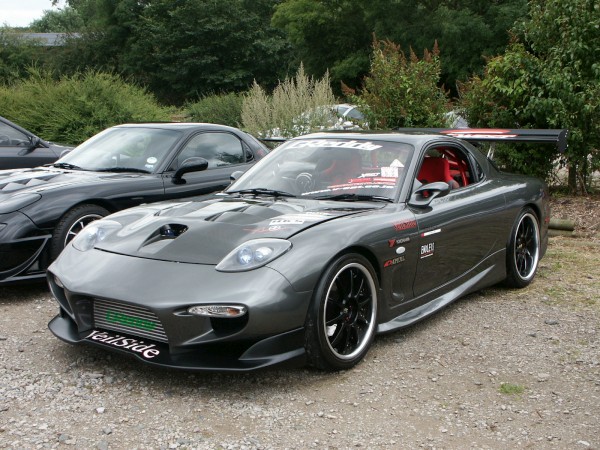
The Mazda RX 7 car

Mazda Cars Style
Mazda Taiki concept car

Mazda Cars Style
1998 mazda mpv exhaust sys

Mazda Cars Style
Red Car Of Mazda Car Picture

Mazda Cars Style
Mazda Kazamai Concept Car

Saturday, October 9, 2010

Mazda New Cars 2011


mazda cars
mazda cool cars
mazda cars 3
mazda cars
mazda cars great
mazda cars
mazda cars 4
mazda cars
mazda cars

Mazda New Cars 2011


mazda cars
mazda cool cars
mazda cars 3
mazda cars
mazda cars great
mazda cars
mazda cars 4
mazda cars
mazda cars

Sunday, September 12, 2010

Mazda3 Hatchback Cars 2010

Mazda has officially taken the wraps off its five-door hatchback version of the redesigned Mazda3 at the Bologna Motor Show today. As you can see in the gallery of new high-res pics below, the Mazda3 five-door gets the same swoopy sheetmetal as its four-door brethren, including the super happy smiley front end face. What's new is an extended roofline that drops down at a steep angle to create a wagon-esque profile. With a D-pillar that kinks up at a swept back angle, the look is very similar to that of a Pontiac Vibe/Toyota Matrix that's been stepped on by a giant. The new cargo capacity will no doubt be appreciated by families who can put every extra cubic foot to good use, and if the current generation Mazda3 is any indication, this will also be the basis for the Mazdaspeed model.


At the moment, all the specs for the new Mazda3 five-door hatchback are for the European market, so don't expect its new 2.2L and carryover 1.6L turbo diesel engines to be available in the U.S. Europeans will also have a choice of 1.6L and 2.0L gas engines, though we expect the U.S.-spec model to offer the same 2.0L and new 2.5L four-cylinder engines as the sedan. Check out the official press release from Mazda after the jump for more details and the high-res image gallery below for more shots of the new Mazda3 five-door hatchback

Mazda3 Hatchback Cars 2010

Mazda has officially taken the wraps off its five-door hatchback version of the redesigned Mazda3 at the Bologna Motor Show today. As you can see in the gallery of new high-res pics below, the Mazda3 five-door gets the same swoopy sheetmetal as its four-door brethren, including the super happy smiley front end face. What's new is an extended roofline that drops down at a steep angle to create a wagon-esque profile. With a D-pillar that kinks up at a swept back angle, the look is very similar to that of a Pontiac Vibe/Toyota Matrix that's been stepped on by a giant. The new cargo capacity will no doubt be appreciated by families who can put every extra cubic foot to good use, and if the current generation Mazda3 is any indication, this will also be the basis for the Mazdaspeed model.


At the moment, all the specs for the new Mazda3 five-door hatchback are for the European market, so don't expect its new 2.2L and carryover 1.6L turbo diesel engines to be available in the U.S. Europeans will also have a choice of 1.6L and 2.0L gas engines, though we expect the U.S.-spec model to offer the same 2.0L and new 2.5L four-cylinder engines as the sedan. Check out the official press release from Mazda after the jump for more details and the high-res image gallery below for more shots of the new Mazda3 five-door hatchback

Sunday, August 22, 2010

2011 Mazda Verisa

Mazda has subtly revised the Verisa crossover (MPV & SUV) for the Japanese market for the 2011 MY. Some may recognise the Verisa, that's because it underpins the 2002 Ford Fiesta/Fusion. The Verisa will still be sold alongside it’s younger sibling, the Demio (Mazda2 in overseas market).

The minor changes consist of new colours for both the fabric and leather seats, revised instrument panel that includes a fuel consumption gauge and an "eco-lamp" to support economical driving, restyled steel wheels and improved standard equipment on some model grades. Sales have already begun.


Main features of the refreshed Verisa

Design:

• The Verisa C features new Coral Brown fabric seats, which are brown in the middle and beige on the sides

• The Verisa L has new Cool Black leather seats with a black and sand-coloured two-tone design.

• To match the new seats, the Verisa L has a black and sand-coloured leather-wrapped steering wheel.

• Both grades have a newly designed instrument panel with blackout metres.

• Newly designed hub caps for both the 14” and 15” wheels.

Equipment:

• Automatic headlights and front rain sensing wipers (which automatically switch on according to ambient conditions), and water-repellent coating (on the front door windows and door mirrors) are standard equipment on the Verisa L grade.

• A fuel consumption gauge (showing average fuel consumption) and an eco-lamp have been added to the instrument panel on all model grades.

2011 Mazda Verisa

Mazda has subtly revised the Verisa crossover (MPV & SUV) for the Japanese market for the 2011 MY. Some may recognise the Verisa, that's because it underpins the 2002 Ford Fiesta/Fusion. The Verisa will still be sold alongside it’s younger sibling, the Demio (Mazda2 in overseas market).

The minor changes consist of new colours for both the fabric and leather seats, revised instrument panel that includes a fuel consumption gauge and an "eco-lamp" to support economical driving, restyled steel wheels and improved standard equipment on some model grades. Sales have already begun.


Main features of the refreshed Verisa

Design:

• The Verisa C features new Coral Brown fabric seats, which are brown in the middle and beige on the sides

• The Verisa L has new Cool Black leather seats with a black and sand-coloured two-tone design.

• To match the new seats, the Verisa L has a black and sand-coloured leather-wrapped steering wheel.

• Both grades have a newly designed instrument panel with blackout metres.

• Newly designed hub caps for both the 14” and 15” wheels.

Equipment:

• Automatic headlights and front rain sensing wipers (which automatically switch on according to ambient conditions), and water-repellent coating (on the front door windows and door mirrors) are standard equipment on the Verisa L grade.

• A fuel consumption gauge (showing average fuel consumption) and an eco-lamp have been added to the instrument panel on all model grades.

Saturday, June 5, 2010

New Mazda Taiki

Mazda unveiled their latest concept car today for journalists touring their Yokohama, Japan, facilities. The Mazda Taiki follows in the path of Mazda’s “flow” design concept with elements of real-world technologies
.
The Taiki is equipped with a next-generation RENESIS rotary engine under the hood, which Mazda claims “sets new standards for environmental and driving performance.” Mazda’s rear-wheel-drive concept is a two-seater inside a body that looks light as air.

Not surprisingly, the nose of the Taiki is similar to previous Mazda concept Ryuga. The new car also looks to be a more refined sibling of the Nagare concept. Both the Ryuga and Nagare were introduced under the “flow” design banner.

The Japanese word “Taiki” roughly translates to atmosphere. Mazda used this name to equate the car’s stretched cabin, short overhangs, and glass canopy with the “protective mantle” around Earth.

New Mazda Taiki ConceptOne of the key differences from previous concept cars is the Taiki’s rear wheels, which seem to stick out a bit, and are covered by a sort-of simulated wheel well. The effect of this is the illusion that the rear wheels are not protected as part of the chassis, but if you look at a picture of the car from behind the wheels look more integrated.
The inspiration behind Taiki’s exterior came from the idea of two floating Hagoromo, “the flowing robes that enable a celestial maiden to fly in Japanese legend,” states the press release. When thinking about the interior, designers looked to the Japanese koinobori carp streamers, and decided to try and create a space depicting the flowing wind.

The Taiki will be debuted to the public at the upcoming Tokyo Motor Show.
New Mazda Taiki ConceptNew Mazda Taiki ConceptMazda also introduced the Premacy Hydrogen RE Hybrid, which the company claims gets 40% better output compared to the RX-8 Hydrogen RE. The end result is faster acceleration and a fuel range of roughly 200 km (124 mi). Five adults should be able to sit comfortably into this hydrogen/gas hybrid. 

The Premacy has a rotary engine that rests in a transverse layout, intake/exhaust resistance and combustion efficiency seeing solid output at different engine speed. Ultimately, the car is believed to have a quick responsiveness along with high energy efficiency.

The car also has a lithium-ion battery that recharges from the car’s braking, and is used for the car’s electric motor. The electric motor also derives power from the rotary engine.

Although the engine runs on hydrogen, it can be switched to gas when the hydrogen runs out.
The Mazda Premacy Hydrogen RE Hybrid will be available in Japan next year, at a leasing cost of around $3,500 per month. The car is being targeted towards government and ecological agencies. It will also see its public debut at the Tokyo Motor Show.

The Taiki and Premacy are another step in an awfully busy period for Mazda. The brand new Mazda Atenza was just introduced at Frankfurt, with expectations to be available for order soon. Atenza comes as either a four-door sedan, five-door sport hatchback, or sport wagon, and is expected to be more economical. This despite its 2.5litre engine that supposedly provides more torque, more response, and more acceleration.

New Mazda Taiki

Mazda unveiled their latest concept car today for journalists touring their Yokohama, Japan, facilities. The Mazda Taiki follows in the path of Mazda’s “flow” design concept with elements of real-world technologies
.
The Taiki is equipped with a next-generation RENESIS rotary engine under the hood, which Mazda claims “sets new standards for environmental and driving performance.” Mazda’s rear-wheel-drive concept is a two-seater inside a body that looks light as air.

Not surprisingly, the nose of the Taiki is similar to previous Mazda concept Ryuga. The new car also looks to be a more refined sibling of the Nagare concept. Both the Ryuga and Nagare were introduced under the “flow” design banner.

The Japanese word “Taiki” roughly translates to atmosphere. Mazda used this name to equate the car’s stretched cabin, short overhangs, and glass canopy with the “protective mantle” around Earth.

New Mazda Taiki ConceptOne of the key differences from previous concept cars is the Taiki’s rear wheels, which seem to stick out a bit, and are covered by a sort-of simulated wheel well. The effect of this is the illusion that the rear wheels are not protected as part of the chassis, but if you look at a picture of the car from behind the wheels look more integrated.
The inspiration behind Taiki’s exterior came from the idea of two floating Hagoromo, “the flowing robes that enable a celestial maiden to fly in Japanese legend,” states the press release. When thinking about the interior, designers looked to the Japanese koinobori carp streamers, and decided to try and create a space depicting the flowing wind.

The Taiki will be debuted to the public at the upcoming Tokyo Motor Show.
New Mazda Taiki ConceptNew Mazda Taiki ConceptMazda also introduced the Premacy Hydrogen RE Hybrid, which the company claims gets 40% better output compared to the RX-8 Hydrogen RE. The end result is faster acceleration and a fuel range of roughly 200 km (124 mi). Five adults should be able to sit comfortably into this hydrogen/gas hybrid. 

The Premacy has a rotary engine that rests in a transverse layout, intake/exhaust resistance and combustion efficiency seeing solid output at different engine speed. Ultimately, the car is believed to have a quick responsiveness along with high energy efficiency.

The car also has a lithium-ion battery that recharges from the car’s braking, and is used for the car’s electric motor. The electric motor also derives power from the rotary engine.

Although the engine runs on hydrogen, it can be switched to gas when the hydrogen runs out.
The Mazda Premacy Hydrogen RE Hybrid will be available in Japan next year, at a leasing cost of around $3,500 per month. The car is being targeted towards government and ecological agencies. It will also see its public debut at the Tokyo Motor Show.

The Taiki and Premacy are another step in an awfully busy period for Mazda. The brand new Mazda Atenza was just introduced at Frankfurt, with expectations to be available for order soon. Atenza comes as either a four-door sedan, five-door sport hatchback, or sport wagon, and is expected to be more economical. This despite its 2.5litre engine that supposedly provides more torque, more response, and more acceleration.

Friday, April 9, 2010

Mazda MX-5


MSRP: $21,750 - $29,290
To some reviewers the 2009 Mazda MX-5 ’s style is neither butch nor muscular. The New York Times says, “It doesn’t have side pipes or a hood scoop or a name that conjures images of bloodlust and rage.” In fact, Car and Driver calls it a “cutie pie,” though Edmunds returns some dignity when it reports that the Miata has “more aggressive styling, without bumping up the price or diluting its perky personality.”
Jalopnik says it "resembles a lightweight power lifter" and describes it as follows: "flared wheel arches rising out of the hood and the trunk, aggressive swells around the headlights and dual pipes poking out of a chiseled, muscular derriere." Cars.com points out that this version of the Miata “retains the fixed headlights but returns somewhat to the original shape, with fewer curves—except for the accentuated wheel arches that recall the 2009 Mazda MX-5
The 2009 Mazda MX-5 Miata is available in two models: a soft-top roadster and a Power Retractable Hard Top model. The hardtop edition is good-looking too; Car and Driver says, “raised, the body-color bubble looks stubbier than the soft-top but is still attractive.”
Inside the 2009 Mazda MX-5 Miata’s cabin, the seat shape is refined for better comfort and lateral support. The center console has more flexible storage, and a padded armrest provides better comfort. “The interior is highlighted with chrome and silver accents, and the driver faces a three-spoke tilt steering wheel,” Cars.com notes of its test car. “The $515 interior trim package,” according to the New York Times, “consists of a few bits of ‘aluminum look’ trim on the door panels and dashboard. Mind you, this isn’t aluminum trim—it’s plastic. For that price, on a per-ounce basis, I’d think you could trim your doors and dash in anything from titanium to sashimi-grade tuna belly.”2009 Mazda MX-5